
Artist Photo

Artist Bio Text
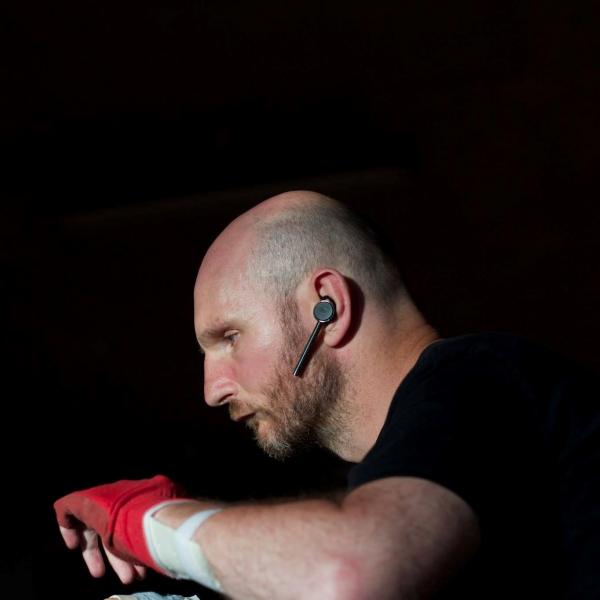
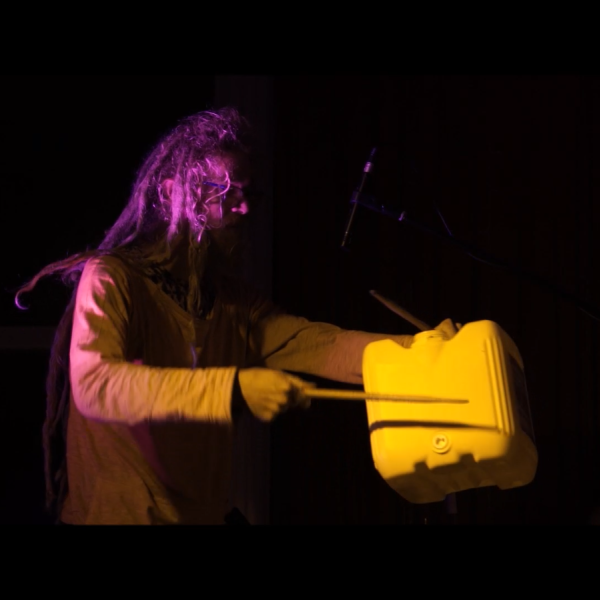
Riki Pirihi (Ngāti Wai, Ngāti Māhanga) is a drummer, composer, and researcher currently residing in Te Whanganui a-Tara.

Ahead of his Performance Residency at Pyramid Club on July 31st and August 1st, Emma Bernard caught up with Riki Pirihi to chat about his creative practice, his life of drumming and the various projects he has been involved with.
I'd love to get an insight into your brain as much as possible. You've been involved in countless projects from the truly experimental, such as the duo work you've done with Jeff Henderson to drumming in Fat Freddy's Drop.
What is the connecting thread that runs through these vastly different projects?
It's actually probably two threads. One would be curiosity, especially more for the improvised realm of things.
And the second thread, which is probably way less important, is that it was a job for a while too, so as a drummer, you just end up freelancing with so many different people. And that's still curiosity, they feed each other, like the curiosity of the more explorative playing feeds into your language when it comes to doing more mainstream-y stuff. It's probably the curiosity, fascination and an eagerness to learn and develop as an artist.
Where I’m at with my musical journey now is very similar to when I started out. I was quite obsessed with the drums when I was a kid and would draw drum kits everywhere and just listen to records all the time and practice with my mum's knitting needles. That awakening has happened again over the past five to 10 years, everything feels fresh, exciting and challenging, and that's quite a good place to be.
And I’m just really loving the next wave of younger musicians coming through. It's so exciting and I always dread that idea of being an old-head that is a gatekeeper or stuck in his ways or whatever.
You seem like the very opposite of an old-head gatekeeper. What was it about the last five, ten years in particular? Was that when you started to experiment more with different genres?
I think it's the community that I've been really lucky to be a part of here. The spaces like Pyramid Club and Happy and all the great people, it’s a super inspiring and learning environment. So it's hard to pinpoint what it is. Again, it always comes down to being fascinated and being exposed to new music.
Drums seem to be one of those instruments where you can be involved with so many different projects at once, and it seems that flexibility is key to this. Is that something you've experienced?
Yeah, I always say to younger players that if you want to be a metal drummer, that's great. But don’t just do that. Jump into other stuff too that is way out of your comfort zone because you'll learn so much, it'll just really strengthen your kind of musical identity in the long term. Don't be afraid to try all this stuff.
You've talked about curiosity, is there anything else that makes you feel drawn to starting a new project or being involved with a project?
I guess with any kind of project, it’s always some kind of dialogue, whether that's musical dialogue or otherwise. And there’s other things: Do I get on with the people involved? Is this project going to push and challenge me in some way?
Joining Orchestra of Spheres was a really great example of that because they were one of my all-time favourite bands before I joined, and then I had the opportunity to play with them. And I was like, oh shit, this music's hard, but it was the most exhilarating. And again, a great example of just such beautiful people to play music with and the most humble musicians and just absolute monsters.
How do you feel Orchestras Spheres expanded your drumming practice?
More than any other project I’ve been a part of, really. It's no disrespect to other things that I’d done previous to that, but sometimes you just go through the motions as a drummer. With the Spheres, because of the improvisational nature of it too, there's lots of good rhythmic challenges in there and I think it just expanded my playing in ways I probably don't realise.
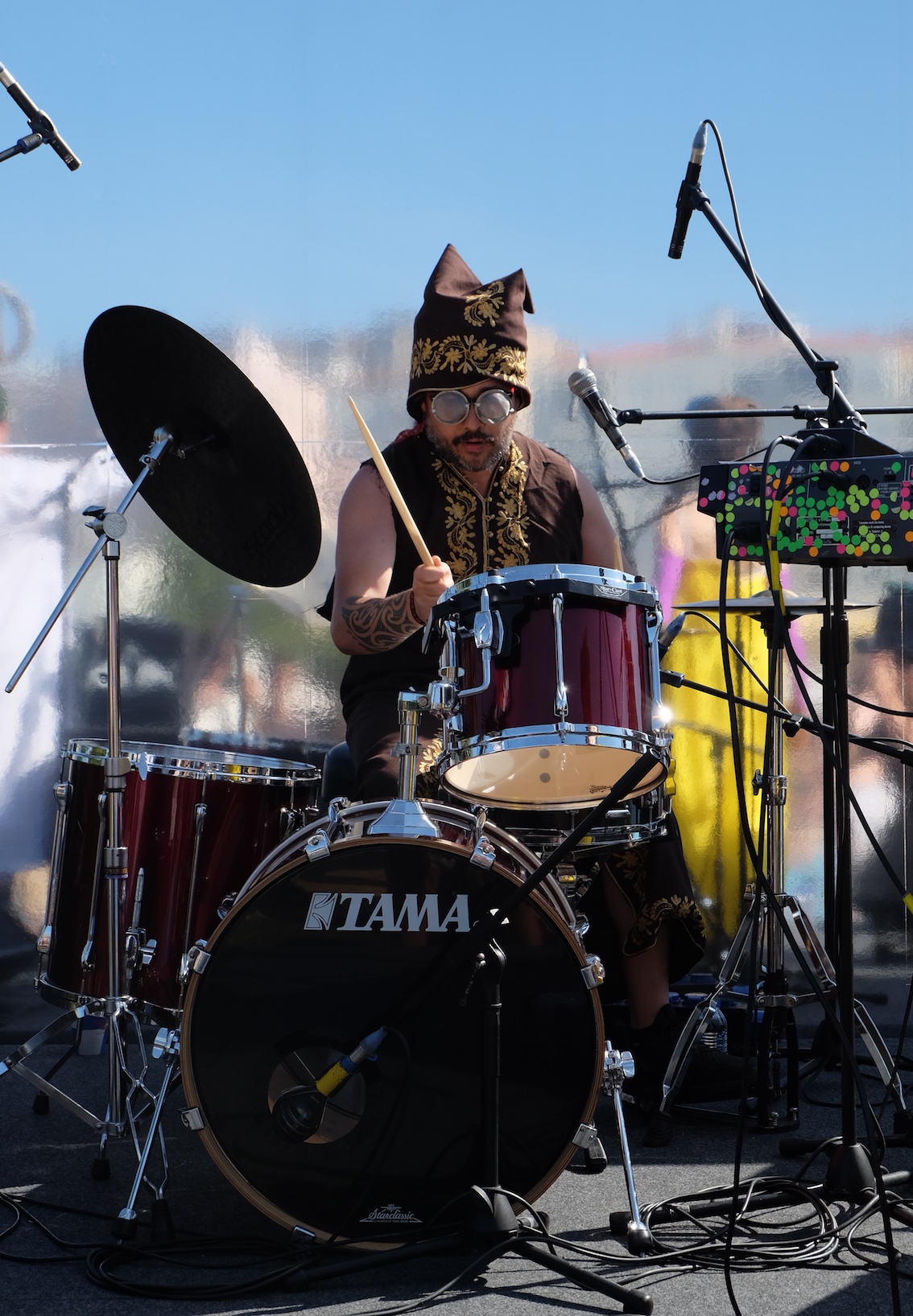
As well as drums, you play modular synthesis, you're also an electronic producer under Cave Circles. Ships, your 2020 album is one that I would highly recommend to anyone out there who hasn't listened to it yet. It’s such a good album, every track's so different.
Thank you. I'm in the process of making a new album, which is completely different again. That was a kind of lockdown album, and I'm wanting to go for a really percussive David Lee Jr Evolution type of album next.
New Cave Circles, that's really exciting. What part of your practice are you feeling most drawn to at the moment?
I really want to lean more into the conduction and really more into the drums and producing and all the stuff that I used to do before I went to uni and did a PhD. So yeah, I'm quite quite excited. Because I just turned 50 this year and I'm going, okay, I better get into it. In 20 years I’ll be 70 and I want to be doing some cool ass shit.
Yeah, mate, you could smash out like 20 albums.
20 different genres!
Call it the 20/20/20 project! But before that, you’ve got your performance residency coming up at Pyramid Club at the end of this month, where you’ll be doing lots of improvised drumming. I would love to know how you prepare your mind for improvisation.
Well, the first thing I always think about, especially in this context where I’m playing as a solo, duo, trio, and a quartet, is not to repeat ideas. Or if I do repeat, it’s a development of the previous idea. So it's a really good opportunity to explore the language you have and all the different ideas you have.
But then I try not to overthink it either. Like it's just suspended in the environment, especially in the solo context. It's just like Milford Graves always says, as musicians or as artists, we’re there to help with the vibratory system of the human body. So whatever you're doing, it goes into the air and the brain, then you want it to give people something for the nervous system. I’m not too interested in trying to be a drum jock or flashy, you know. I really think the main thing is to be lyrical and open and use a lot of space and just colour and just be this patient day taking your time with stuff.
So all these things go through my head and then the people I'm playing with, who I know really well and I love them all as musicians and it's been lucky to play with them over the years, so it's really, really nice being in this environment. I'm still a little bit uncomfortable with the whole master drummer thing. Maybe if I was like 80 or something. I was asking Dan if it could be called student drummer nights, because I do feel like that. I don't feel much different till when I started on the instrument.
A humble master!
I'm just not resigned to say that I'm here now, I've made it and I know everything. It's that thing where the more you know about something, the more you realise you don't know jack shit. I definitely won't be going into the mindset, like, oh, I'm the master drummer here to do some master drumming. It's very much just like I’m a dude that loves this instrument and the people, and just hoping to create something memorable.
When you're performing with people that you know and love and have performed with before, how is that different to improvising with someone you don't know? Do you kind of have a kind of shared language?
Definitely. For Al Fraser and I, for example, we've played together a lot. There is a kind of subconscious language between us, like I know when Al plays like a particular instrument, automatically I'll shift modes and trying to accompany him, and if he's playing something that's quite high in register, I won't be up high as well. I'll just come underneath, go low, just simple things like that. Over time you build up an understanding.
With Jeff Henderson too, I love doing duo stuff with Jeff because he really pushes you, and now I'm at the stage where I just try and keep up and it turns into that flow state thing. You're in agreement that you’re both making this up as we're going along, so we both have this kind of understanding that we're not going to take up too much space, but try to leave room for each other to communicate our ideas. So two different modes of thought, but kind of similar too.

Alongside your two master / student drummer nights, you're also doing an afternoon workshop of your conduction practice. For anyone that doesn't know, you completed your Doctor of Musical arts degree in composition and wrote your PhD on this idea, Rangatuone, an indigenous embodiment of conduction.
What is Rangatuone to you? And what kind of journey were you on for it to be the final output of your studies?
It really all comes back to Butch Morris, who invented conduction. Particularly the use of gestures and signs to symbolise music notation. And you conduct it and you invite musicians to respond to that. I love it as a practice and I saw it as an opportunity to weave it into the use of taonga pūoro. So a lot of my research was with taonga pūoro, and I did a few non-pūoro environments too.
It's like anything with it if you do a doctorate, you don't really complete anything, you just start something and by the time you get to the end of the project, you're like, oh, I'm at the beginning of this whole thing still.
The more you know, the less you know, again.
Yeah. That’s really what it is, and it's a simplified version of conduction that is reframed through ideas that are more centred around the pūoro themselves rather than European instruments or Western instrumentation. But, you know, in that workshop, I'll pull in bits of that, but also bits of Butch Morris's conduction as well because it's a lot wider and the lexicon of gestures is huge and you can do lots of cool stuff. So, yeah, how exciting.
What is that experience of conducting a group of people compared to playing the drums in a group?
To be really honest with you, I find it quite uncomfortable. I definitely prefer playing the drums more and I was really, again, I was just curious about conduction and learning about it, and then I found myself doing the conducting part of it. I didn't think about that.
The conductor in that context, is only there for the structure of the music. You're not actually writing any music. It's all the musicians that are creating the music. The conductor is just shaping it and giving it form, giving it dynamics or whatever, but it's the musicians, their history and their personalities that actually bring the music alive.
Riki Pirihi (Ngāti Wai, Ngāti Māhanga) is a drummer, composer, and researcher currently residing in Te Whanganui a-Tara.