
In Conversation with Shayne Carter

I'm very excited to be chatting with an absolute gem of Aotearoa music, Shayne Carter, who needs no introduction. Shayne, it's a real privilege to chat to you today. Your career has been extensive. I'd love to hear how you look back on the different stages of your musical career now.
My dad was a rock musician and my mum was a cabaret singer, so I was always around music. I had my first band when I was 14, and I actually think it's amazing that four or five decades later, I've somehow managed to go my whole life being a musician. It's not without its challenges, as any musician will testify, but I love that.
I've been in bands, and I've always tried to avoid getting stuck in one place creatively. I just want to keep exploring, keep trying new things and keep learning, because music is this mystery that you're never going to get to the bottom of. There is always something to learn, and I love that. I love the fact that I'll never solve the mystery.
It's a journey of discovery, really, isn't it?
Totally. Do you ever find that frustrating, that you'll never get to the bottom of it?
No, I love that. There probably is a finite amount of music in the world, but it's also infinite, you know? What charges it and informs the best versions of it is also infinite. Music is a transcendent force. It's kind of like the mountains or the sea. It's just this natural state of being.
It's very apparent that you're always trying to do new things. Is there a connecting thread between it all?
Of course. Whatever form or thing that you place yourself in, it brings out different parts of your musical personality. That's a process of discovery. For instance, when I'm writing conventional songs, in some ways that's the complete opposite of doing improv gigs. I've also done quite a lot of work with dance, with ballet and theatre and soundtracks and all that kind of stuff. It's still different aspects of your personality that get a chance to exercise.
I guess there are similarities. You're still trying to find something that feels true, and you know when it feels true, whether you're doing an improv set and you arrive at some magical point, or when you construct a song and you know that the chorus is killer.
I love the convention of songwriting. You can't beat a good tune, you know? Everyone's got a favourite song. I remember when I left Straitjacket Fits, which was my successful rock band, I spent two or three years back in Dunedin where I basically didn't write any songs. I just jammed with people because I was sick of songwriting. Then I came back to it. It was kind of like having a break from aspects of yourself and exploring other aspects.
Was that when you got into the more improvisational side of music-making?
I think it was more about drifting away from the conventions of songwriting and rock music. There is still good rock music. It's sort of a rare beast now, and in the same way, there's still great songwriting going on. It's interesting what's happening with songwriting at the moment, with modern production and all that kind of stuff.
I love songs. I think the whole secret of being a good songwriter is captured in one of my favourite quotes about Bach. Someone wrote about him and said that his chord choices were "unexpected, yet inevitable." I think that's the secret to good songwriting.
The songwriting I can't stand is when you can predict the chord change just before it happens. "And here's the bridge, and here's the chorus." You know what I mean? A lot of songwriting is like that, but it's designed quite often to be liked. That's the worst reason for music to exist. "Please like me." Thankfully, being a punk rock child, I never thought that was the point. Music that exists just to be liked is offensive. That kind of music can be like comfort food. It's predictable and it goes to places where you expect, and there's something satisfying for the purveyor of that. But I like songs that surprise you, delight you.

You've delved into lots of different genres: indie rock, avant-garde, ambient. Is there a kind of music that you'd love to experiment with or explore that you haven't yet? Maybe a DJ set? DJ Shayne Carter?
Well, I have actually got this DJ persona, but I call him Keith Miller, because that's the worst DJ name I could think of. It's not even DJ Keith. It's just Keith Miller. He puts a sign up at the front that says, "Quiet please. DJ Keith Miller in session. No requests, please.". I haven't pulled out Keith Miller for quite some time.
I just did a solo tour where I was going around playing songs on my acoustic guitar, and then the next thing I was doing was playing with symphony orchestras. That's going from one instrument to about 90. Then I had a jam band with Bill [Ritual Heaps] and my friend Richard. Last year we spent every Sunday having jams. Richard's a doctor, so we ended up jamming in the vasectomy clinic, which was a great ambient setting. So I'm doing this free noise freak-out stuff as well.
To me, it's just all music. It's all vibes and vibrations. And the beauty of it is that I just love playing with other people. For me, music, when you play with other people and you're not doing a solo show, is like this really great conversation. Quite often it feels deeper than a conversation. It's just a really great way to connect with other people.
What role do you find yourself in when you're collaborating and making music?
It depends on the setting. I've worked as a producer on bands and with artists who are doing songs, and I really like that. My job as a producer isn't to impose myself all over it. It's to bring out what that person is about and offer anything that I know that can help them with that.
I started out as the singer. I was the front person in one of my bands, being the person up front who's singing and leading from the front. But I'm also happy to be in the background. I remember years ago, I did a stint where I was one of the backing singers for Bic Runga. I loved being a backing singer. So I'm happy to fit whatever pocket is part of the parcel. With little jam bands, it's not about imposing yourself. I just try to occupy my slot
I also think one thing is that you occupy your pocket, and at the same time, sometimes the best thing, which I think a lot of musicians forget, is just to shut up. Silence is a note. I think a lot of us musicians forget about the beauty of silence. Sometimes the most eloquent thing you can say is nothing. And then when you do say something, it counts even more. Space is your friend. I don't feel the need to impose myself all over stuff. I just try to find what my pocket is and what I can contribute to this thing throbbing in the middle of the room, which is the piece of music.
It's funny you say that, especially with the silence thing. In jams or improvisational settings, it's such an underrated tool. It takes quite a bit of sensitivity to realise that, and then actually implement it. If you're having a jam and there's a bit of silence, what's the first thing you do? Fill the silence. And it's not always the best thing to do.
Yeah, I agree.
Especially with improv, and that struggle is actually quite compelling. Something is being created in front of you, and there's all this stumbling around, and then, if you're lucky, it'll arrive at a point. I sometimes think with improv bands that everyone's going for it, and I wonder whether that's a panic reaction to being so vulnerable. Everyone's skronking hard.
I did a show the other night at the Audio Foundation up here in Auckland. I was playing with Pat Kraus, whose electronic stuff I really like and have deep respect for. We were both playing a guitar set, and we decided at the start not to play super loud. I actually don't like playing super loud. I really love volume, but I sometimes play improv gigs that are pathetically quiet. If people want to drown me out, I'm not going to turn up. I've fought my volume wars, and I'm not going to fight them anymore. If you're going to drown me out, that's cool. That's your prerogative.
It's not being afraid of space and not being afraid of silence. Stuff can be super intense, the quieter it is, there's kind of an inverse intensity to it. With my guitar sounds, I find the decay of the note just as interesting as the actual note. So once again, you need some space for that to come through.
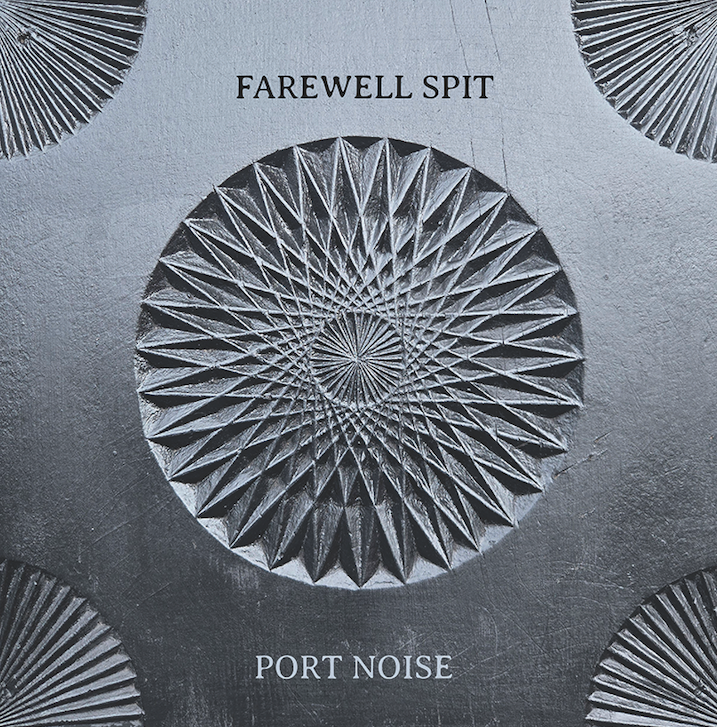
Let's talk a little bit about Farewell Spit. You guys are playing at Meow on August 8th. It's a bit of a supergroup, really, with some of Aotearoa's finest experimental musicians including yourself, Dan Beban, Jeff Henderson, Tom Callwood, Anthony Donaldson and Riki Gooch. How did you become a part of it?
I was living in Wellington, and Jeff was coming down to do the show. I don't know who asked who. Maybe Dan or Jeff asked me, and I was right up for it. I've played about half a dozen shows with the group.
Every player in that band is a really interesting person and a great musician, and, more importantly, they're good sorts with an excellent sense of humour. There's definitely no precious members of that ensemble. Everyone brings their own aspect of freak to events.
What aspect of freak will you be bringing?
Quiet freak. I like sitting in the corner quietly, occupying whatever's going on. I like sitting on a seat in Farewell Spit, just quietly tuning into whatever's going on. It's cool.
And you're quite a pedal nerd, eh? You love your pedals. Is that something that you get to explore with this kind of music?
It's perfect for that kind of stuff. That's what happened to me in the pandemic. Somehow I got into buying pedals and spent an inordinate amount of money because I was bored out of my brain, buying pedals and making weird sounds in my room for about a year.
Tristan from HDU and Mountain Eater, who was the person with the biggest pedalboard in New Zealand, said to me one day, "Don't you think you've got enough pedals?" If that dude is the one staging the pedal intervention, you know you've got a problem.
What did you do? Buy more pedals?
It's a challenge. I thought, "I'll show you."
The only thing is that you've got to watch it because you can become more concerned with switching between pedals when no one in the audience even notices. It doesn't make any difference. You just keep switching pedals. But yeah, I like it. It's the same with some of my note choices and sound choices. I like not knowing what's going to come back at me when I strike a note. I mean that with both the sound and the nature of the note. It becomes boring if you're a guitar player going, "Oh well, there goes D. And, oh yeah, gee, it's still there."
Quite often, when I'm playing guitar, I just throw my hand to the fret board. I don't actually know what a lot of the chords are called. You realise, too, because you're a musician yourself, that when you hit a note, even if it's wrong, the notes either side are probably going to fit.